Nobody is promoted for the disaster that did not happen
Prevention spending is politically invisible by construction. Until that is fixed, relief will keep outcompeting it for money.
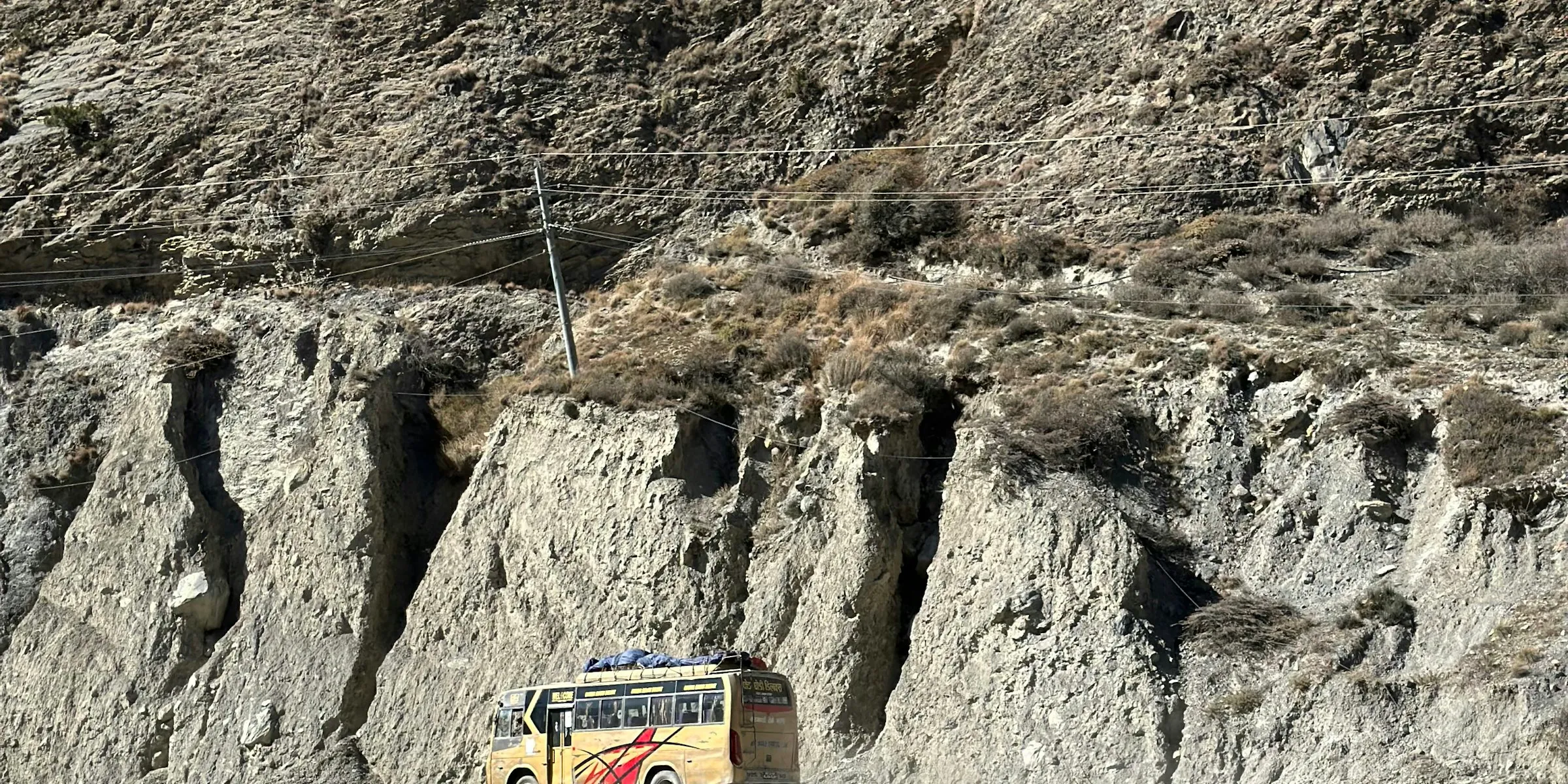
Nainital, Uttarakhand Photograph: Rudra Gupta / Unsplash
Relief is a photograph. Prevention is the absence of a photograph.
That asymmetry explains most of what is wrong with disaster financing, and it is worth stating without euphemism: a minister who funds a retaining wall that quietly holds for twenty years has nothing to show, while a minister who arrives with helicopters after it fails is on the evening news. The money follows the visibility, not the arithmetic.
The arithmetic is not in dispute. Across the literature on mitigation economics, every credible study finds that money spent before an event avoids several times its value in losses afterwards. The exact multiple varies by hazard, by geography and by method. The direction has never been seriously contested.
And prevention still loses the argument. This tells you the problem is not evidence.
Four structural reasons prevention loses
The benefit is counterfactual. You cannot photograph a flood that did not occur. Every other category of public spending produces an object; prevention produces a non-event, which no accounting system is built to record and no electorate is built to notice.
The timescales are wrong. Costs land inside one political term. Benefits land across several. Any actor whose horizon is shorter than the asset’s life is rationally under-investing, and most of them are.
The budget lines are separate. Response funds are typically easier to access and less contested than mitigation funds. Where the two sit in different pots with different rules, the easier pot is where the activity happens, regardless of which produces better outcomes.
Nobody owns the loss that was avoided. Avoided losses have no claimant and no constituency. Incurred losses have both, and they are loud.
Where the risk currently sits
In the Himalaya, most disaster risk is held by the people least able to carry it.
A household whose house, land, livestock and tools are all in the same valley is completely uninsured against a hazard that takes the valley. When it comes, the loss is absorbed by selling assets, withdrawing children from school, taking debt at rates that compound faster than any recovery, or migrating. These are not recovery mechanisms. They are mechanisms for converting a one-off shock into permanent poverty.
Formal insurance barely reaches this household, for reasons that are structural rather than accidental:
- Assessing individual claims across dispersed mountain settlements costs more than the premiums justify
- Correlated risk, everyone in the valley claiming at once, is precisely what conventional underwriting is designed to avoid
- Informal tenure means the asset frequently cannot be documented
- Premiums are due before the harvest, and the household has no cash before the harvest
Parametric instruments, which pay on a measured trigger rather than an assessed loss, remove the first problem entirely and pay in days rather than months. They introduce basis risk: the possibility of real loss with no payout because the trigger was not met. That risk is not academic to a household with no second line of defence. Designing the trigger is therefore the whole game, and it is an area where serious work is still needed.
What CSR money could be doing and mostly is not
India’s corporate social responsibility framework directs substantial private capital toward social outcomes, and disaster management is an eligible activity. In practice a large share of it arrives after events, as relief.
That is the most emotionally legible use of the money and close to the least effective. The same rupee spent before the event buys considerably more resilience, and the reason it is not is that relief gives a company a dated, photographable intervention with a clear attribution story.
Pre-event CSR is harder to narrate and better in every other respect:
- Retrofitting schools and health facilities, which are publicly owned and used as shelters
- Training masons in seismic-safe construction, which compounds across every building they touch afterwards
- Funding the recurring costs of community preparedness, which almost nothing else will fund
- Capitalising a local contingency fund that releases on a pre-agreed trigger
The obstacle is not regulatory. It is that nobody has built the attribution story that makes prevention reportable. That is a solvable communications problem sitting in front of a large pool of capital.
Recovery is where the real budget is
The largest single opportunity in disaster finance is not the prevention budget. It is the reconstruction budget, which is enormous, concentrated and spent fast.
Reconstruction money rebuilds the built environment of an entire area within a few years. Spent well, it is the cheapest resilience available, because the marginal cost of building back to a better standard is small compared to the cost of rebuilding at all. Spent badly, it reconstructs the exact vulnerability that produced the disaster, at full price, and resets the clock.
What determines which happens is almost entirely decided in the first weeks, under maximum time pressure, when the overwhelming political demand is for visible speed.
Which means the standards, the hazard maps, the model designs and the approval pathways have to exist beforehand. A reconstruction policy written after the event will be written too late to govern the event it was written for.
What we are asking at WSDM 2026
The Investment pillar at the summit is not a fundraising session. It is an argument about instruments and accountability.
Three questions we want answered by people who hold budgets:
- What would make prevention spending visible. What a state would have to publish, annually, for avoided loss to become a number anyone is accountable for.
- How a parametric trigger is designed for Himalayan hazards so that basis risk does not fall entirely on the household.
- What a pre-approved reconstruction standard looks like, agreed in peacetime, that survives contact with the political demand for speed.
Nobody is promoted for the disaster that did not happen. Until that changes, the cheaper option will keep losing, and we will keep paying the expensive one.
The Investment pillar runs across all three days of WSDM 2026. Abstracts on disaster risk financing, insurance, governance and international cooperation are invited.
More from Insights
- Intelligence The last mile is the whole problem India’s forecasting has improved faster than almost anyone expected. The distance between a forecast and a household has not. Read
- Infrastructure Build for the slope, not the spreadsheet Himalayan infrastructure fails in a pattern. Almost always, the failure was priced out of the design long before the ground moved. Read