Build for the slope, not the spreadsheet
Himalayan infrastructure fails in a pattern. Almost always, the failure was priced out of the design long before the ground moved.
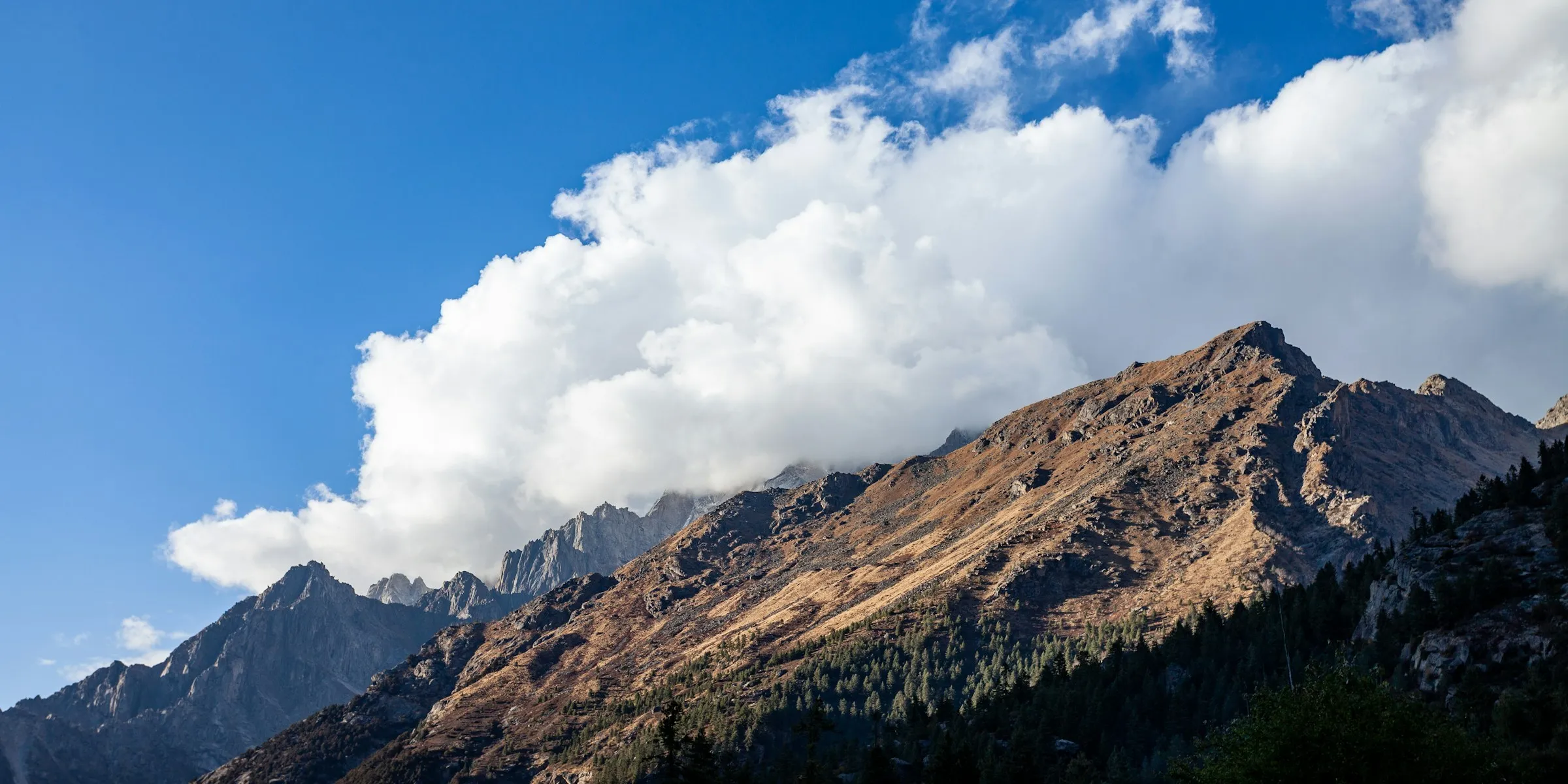
Jomsom, Nepal Photograph: Deepavali Gaind / Unsplash
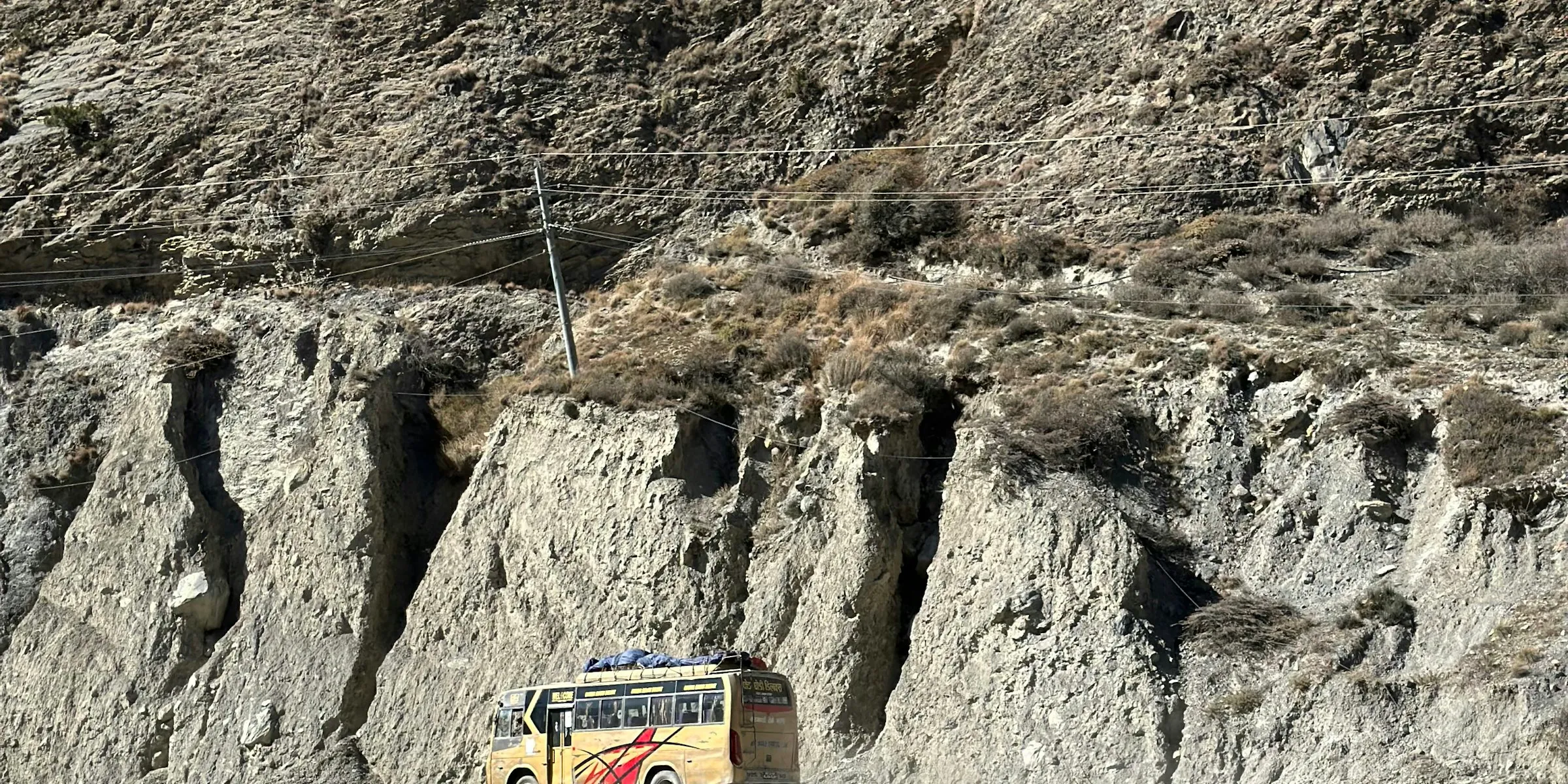
A road cut into a Himalayan slope is not a road. It is a permanent intervention in a hillside that was already, geologically speaking, on its way down.
This is well understood by the engineers who build them. It is rarely reflected in how the work is costed, tendered or evaluated, and that gap, between what the mountain requires and what the procurement document rewards, is where most of the region’s infrastructure failures are actually decided.
The failure has a shape
Walk a damaged stretch after a monsoon and the sequence is usually the same.
Water arrives somewhere it was not designed to arrive. Drainage sized for a historical rainfall distribution meets a rainfall distribution that no longer holds. The water finds the toe of a cut slope. The slope, destabilised when it was cut and never fully re-stabilised, begins to move. The movement takes the road, and frequently takes what was built below the road.
Every step in that chain is predictable. Most of them are cheap to interrupt. Drainage is not expensive relative to the asset it protects. Slope stabilisation is not exotic engineering. The reason these steps get skipped is not technical ignorance.
It is that drainage does not look like progress. A tender evaluated on kilometres delivered per crore rewards the contractor who spends less on what will not be visible in the photograph.
Three decisions that get made too early
The alignment. By the time a route is fixed, most of the risk is fixed with it. An alignment chosen for cost and gradient, before any serious geotechnical survey, locks in slope instability that the structural design then has to fight for the asset’s whole life. Hazard-sensitive route selection is the cheapest risk reduction available in mountain infrastructure and the one most often skipped, because it delays the start.
The design rainfall. Structures are still being designed against return periods derived from records that assume a stationary climate. The climate is not stationary. A culvert sized for a 1-in-25-year event, where that event now arrives every six or seven years, is not under-engineered by accident. It is correctly engineered to the wrong question.
The maintenance line. Capital and maintenance are usually different budgets with different owners and different political returns. Nothing in that arrangement favours the person who wants to clear a drain. The asset is handed over, the recurring line is thin, and the structure begins quietly failing on a schedule nobody is accountable for.
Joshimath was not a surprise
The subsidence that forced evacuations in Joshimath in early 2023 was foreseen in print. A state-commissioned committee had warned in 1976 that the town sat on old landslide debris, that its load-bearing capacity was limited, and that construction and drainage needed to be controlled accordingly.
The warning was correct, specific and on file for nearly fifty years.
What that case demonstrates is not a shortage of science. It is that a risk assessment with no regulatory teeth is a document, not a control. Between the report and the buildings stood an approval process that had no obligation to read it.
This is the question that matters for every Himalayan town currently growing faster than its plan: not do we know the risk, but what in the system is empowered to act on knowing it.
Retrofitting is unglamorous and it is the actual work
Most of the built environment that will exist in Uttarakhand in 2040 already exists today. The resilience of the region is therefore mostly a question about existing stock, not new construction.
That reframes the problem in ways people find inconvenient:
- The unit of work is small. Thousands of modest interventions on individual buildings, not a handful of large projects.
- It is hard to attribute. Nobody cuts a ribbon on a retrofitted school.
- It runs into tenure. A great deal of vulnerable housing is held informally, which complicates every instrument that might otherwise reach it: subsidy, insurance, enforcement.
- It needs local trades, not contractors. Masons who build the next ten thousand houses determine more about seismic safety in the region than any code does. Training them is a resilience programme. It is almost never funded as one.
Schools and health facilities are the obvious starting point, and not only for the humanitarian reason. They are publicly owned, which removes the tenure problem, and they are the buildings a village actually shelters in.
Nature-based is not an alternative to engineering
Bioengineering, which covers vegetation, live crib walls and managed drainage lines, is sometimes presented as the soft option against hard structures. On a Himalayan slope it is better understood as the only approach that gets stronger with age.
Concrete begins degrading from the day it cures. A stabilised, vegetated slope does the opposite. The honest trade-off is time: it takes seasons to establish, which sits badly with a project cycle that needs to show completion inside a financial year.
That is a procurement constraint presented as an engineering one. It is worth naming it as such.
What we are asking at WSDM 2026
The Infrastructure pillar at the summit is built around a single reframing: that most infrastructure failure in the mountains is a governance outcome with an engineering signature.
The sessions we most want to see contested:
- How a tender can reward resilience. What a procurement document would have to measure for the drainage to survive the costing meeting.
- Who enforces a hazard map once it exists, and what happens to an approval that contradicts one.
- How retrofitting gets financed at the scale of a town rather than a demonstration project.
Design for the slope you actually have. The spreadsheet will not be there when it moves.
The Infrastructure pillar runs across all three days of WSDM 2026. Abstracts on resilient construction, hazard-sensitive planning and retrofitting are invited.
More from Insights
- Innovation A forecast is not an evacuation Prediction has become the easy half. The hard half is the chain of human decisions that has to fire before the water arrives. Read
- Inclusion Who is still in the house Evacuation statistics describe the people who left. The people who could not are a different list, and it is knowable in advance. Read